

Every profitable website begins with a structured website discovery process. Asking the right questions early shapes the site’s structure, features, and design long before the first pixel or line of code. At LightSpeed, this process ensures clarity from day one, helping clients and agencies align expectations and avoid costly mistakes.
Why the Website Discovery Process Matters
A well-run discovery process sets the tone for the entire project. It does more than gather information—it builds trust, ensures both sides are aligned, and prevents scope creep.
At LightSpeed, we kick off discovery immediately after the proposal is signed and the deposit is paid. This way, both parties are committed, and the answers carry weight.
“Clarity is critical – ambiguities here will multiply in later stages.”
💡 Agency Highlight

What to Include in a Discovery Questionnaire
Your discovery questionnaire should be simple, structured, and tailored to the type of project (basic, e-commerce, or custom). Key sections typically include:
- Brand identity – Client story, services, ideal customers, and brand personality.
- Website content & functionality – Goals, desired pages, content status, SEO needs, marketing plans.
- Design preferences – Colours, fonts, and example sites they love (or dislike).
- Practical & technical details – Hosting, integrations, multilingual needs, update preferences.
- Future plans – Features or services to be added later.
👉 Use a generic discovery questionnaire template to guide clients with prompts and examples, so they know exactly what to provide.
“Most delays aren’t technical — they’re about content and access. Solve those first.”
💡 Agency Highlight
How We Run the Website Discovery Process
Our step-by-step workflow keeps projects moving:
- Prepare the right template – Adapt it to match the signed proposal and project type.
- Send it properly – We share either a Google Form or a fillable PDF, together with a personalised cover letter email template. This explains the purpose, the time required (30–60 minutes), and the deadline.
- Allow time and follow up – Clients have 3–5 business days to complete it. We send a reminder if late and offer a call for clarification.
- Review and sign off – Our Design Lead and Technical Lead review responses for creative direction and technical feasibility, flag gaps, and schedule a call to resolve missing details.
“No stage starts until the previous one is signed off.”
💡 Agency Highlight
Tips for Clients
Explain why the questionnaire is worth their time. The more detail they provide, the smoother the project will be. Encourage clients to:
- Be honest—if unsure, leave notes so the team can advise.
- Think from the customer’s perspective.
- Gather input from stakeholders.
- Provide assets early (logos, brand guidelines, imagery).
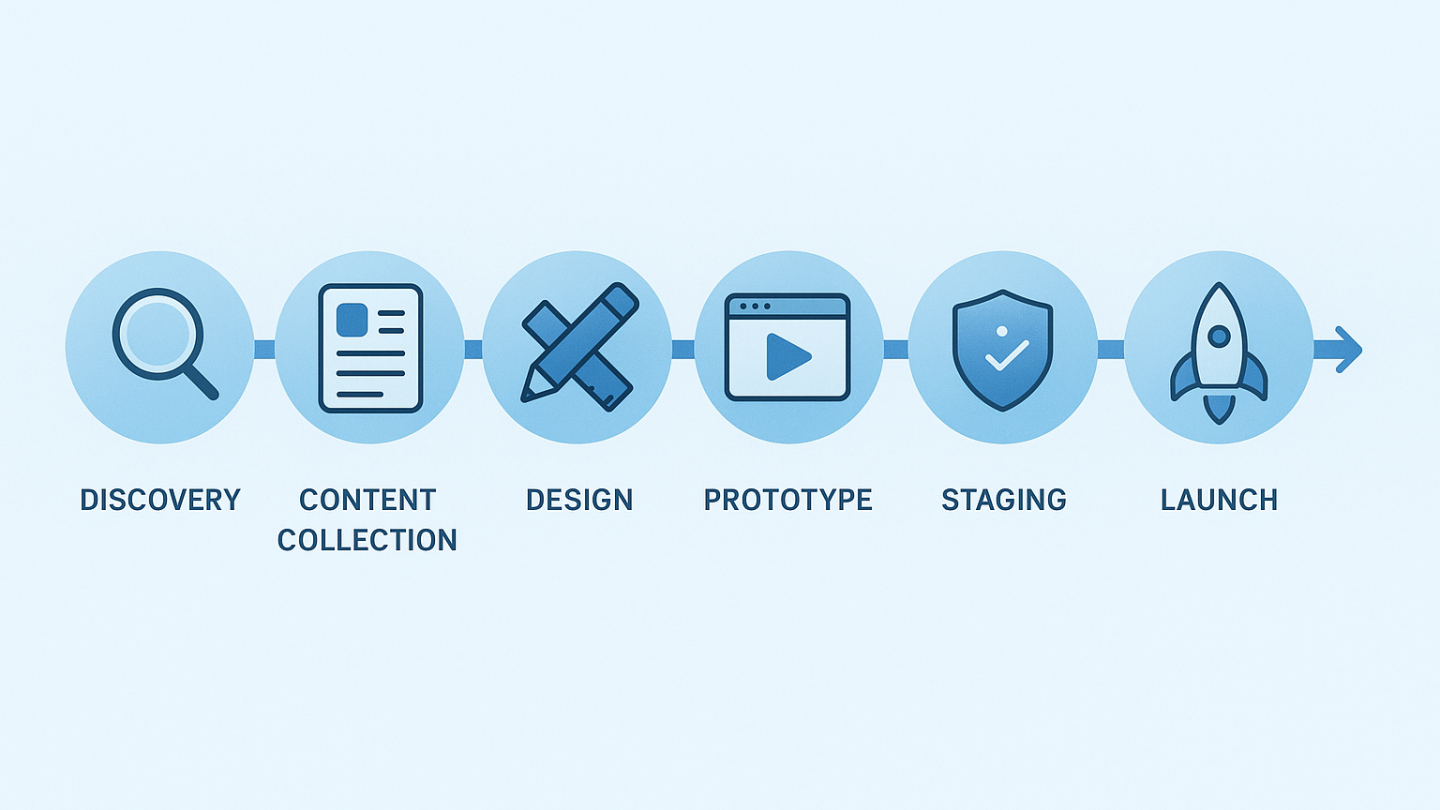
The discovery process concludes with a kickoff meeting to confirm scope and timelines. Only once discovery is complete do we move into sitemap and design stages, ensuring content collection is clear and structured.
“Process isn’t bureaucracy—it’s insurance for budgets and timelines.”
💡 Agency Highlight
👉 Next in this series: Website Content Collection Process: Words Before Pixels

Frequently Asked Questions
A proper discovery phase offers more than information—it builds alignment and trust, prevents scope creep, and ensures both client and agency clearly understand the project’s purpose from the outset. It often determines whether the project stays on budget and timeline.
We keep it targeted and structured. Key sections include:
– Brand Identity (services, story, clients, tone)
– Content & Functionality (goals, pages, SEO needs, marketing plans)
– Design Preferences (style, colours, reference sites)
– Technical Details (hosting, integrations, multilingual needs)
– Future Growth (features planned post-launch)
This matches what industry experts recommend for capturing a project’s full scope upfront.
Here’s how we run it—step by step:
1. Adapt a template to your project type.
2. Share it via Google Form or fillable PDF with a clear deadline.
3. Clients have 3–5 days to respond; we follow up as needed.
4. Our design and technical leads review responses, flag missing info, and schedule a clarifying call.
5. No next phase begins until discovery is signed off. This mirrors the best‑practice approaches in the industry.
By gathering honest input, thoughtful planning, and documented sign‑off early, we avoid misaligned expectations later. Clients are encouraged to ask questions or leave notes where unsure—it’s about clarity, not judgement.
Typical outputs include:
– A refined project brief or strategy document.
– A defined sitemap or page list.
– Clarified requirements categorised as “must‑have” or “nice‑to‑have,” ready for prioritisation and sign‑off.
– This toolkit sets scope, timeline, and cost with precision.
Discovery helps us define:
– Business context, goals, and KPIs that inform design and purpose.
– User personas and journeys to tailor UX.
– Technical needs and CMS decisions based on the project’s future fit.
Most agencies complete discovery in 2 to 4 weeks, though scope and complexity can extend this. LightSpeed speeds this up using structured templates and focused follow‑up, without compromising quality
Not at all. Every project—even simple ones—benefits from it. It ensures clear scope, avoids surprises, and sets design and development on firm footing.
We make it clear why it’s worth their time: more detail now means fewer delays later. Encourage honesty, multi-stakeholder input, and early asset sharing (like logos or brand documents). That pays dividends downstream.
Once discovery is signed off, we book in the kickoff meeting to confirm scope and timelines—and then move on to sitemap and design. It keeps momentum, focus, and everything aligned before any visual work begins.


